Deals Module
Deal pipeline management interface for tracking and closing deals.
Pipeline Management, Reimagined
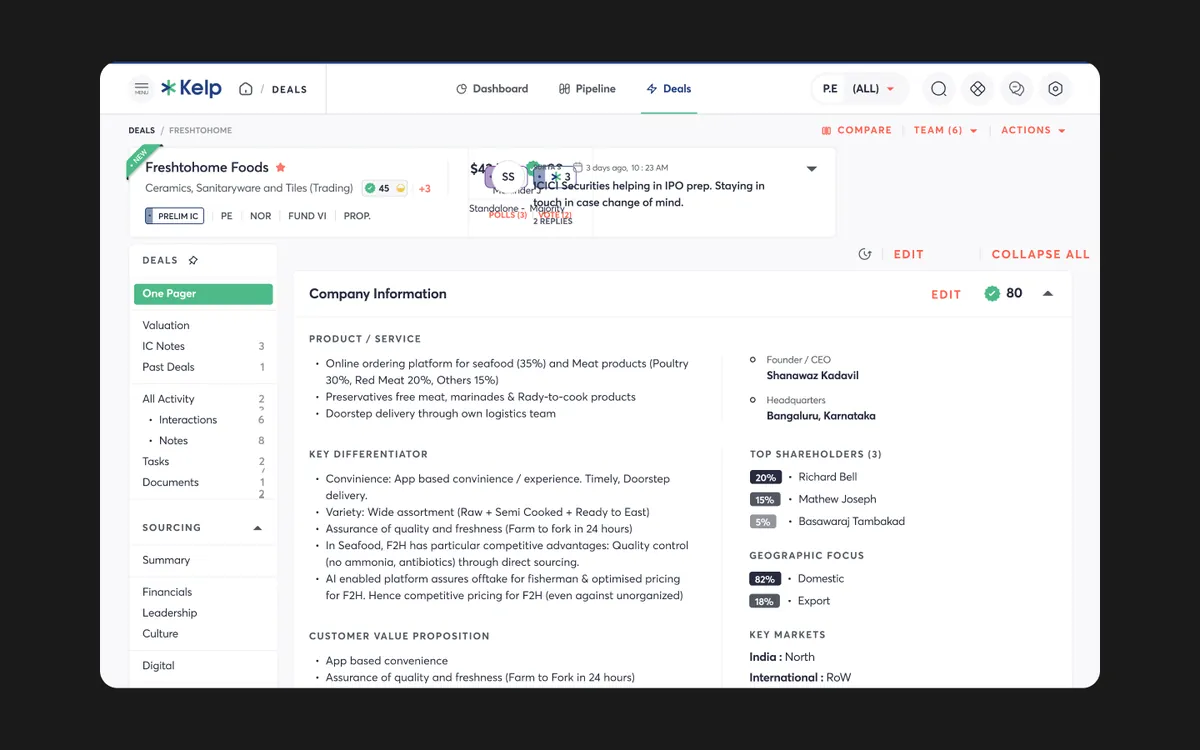
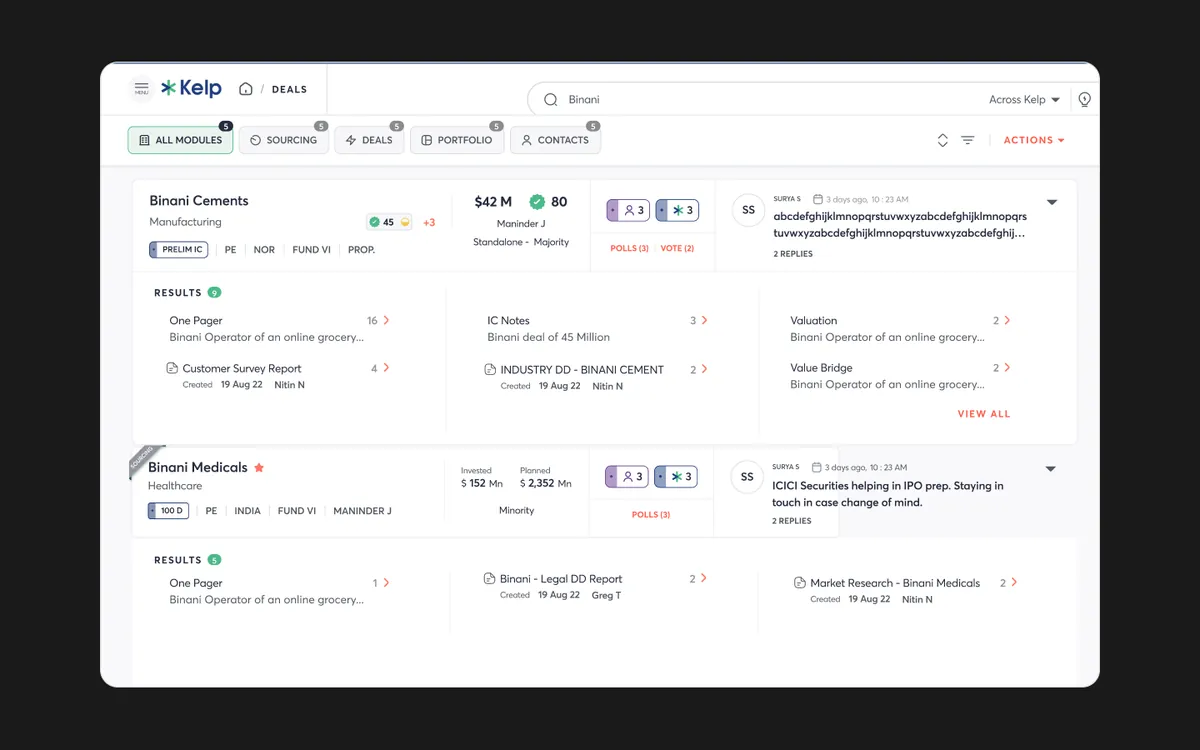
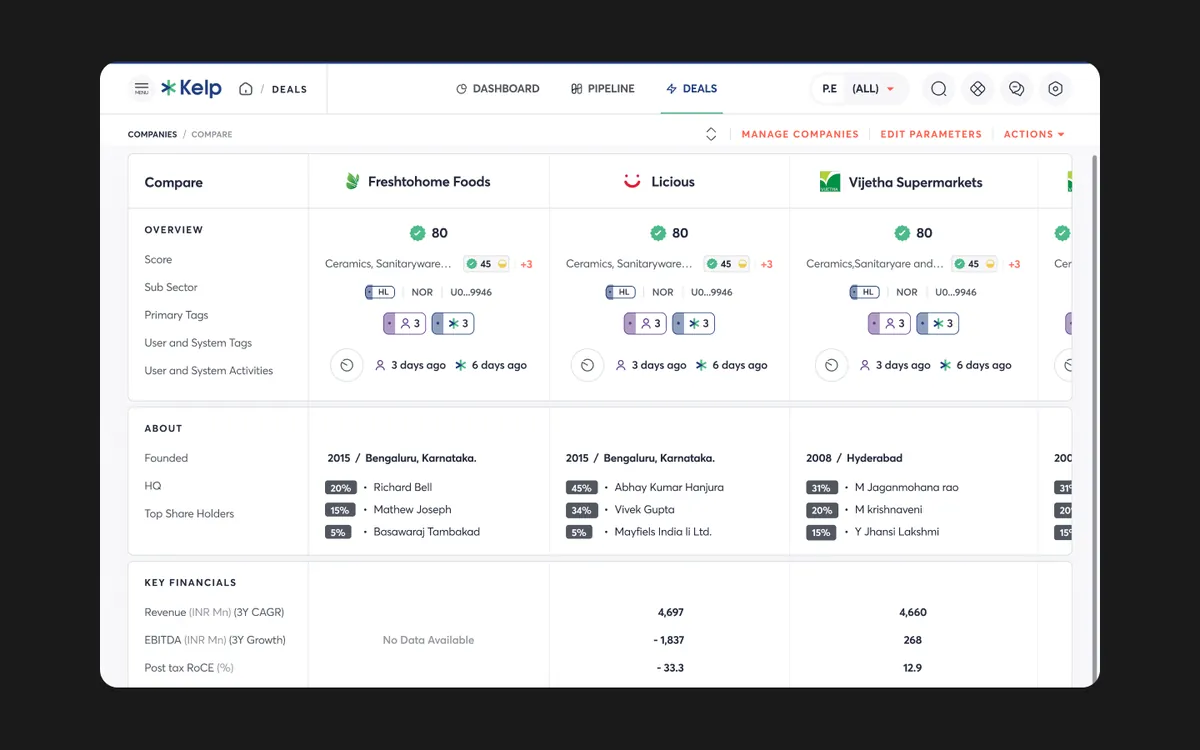
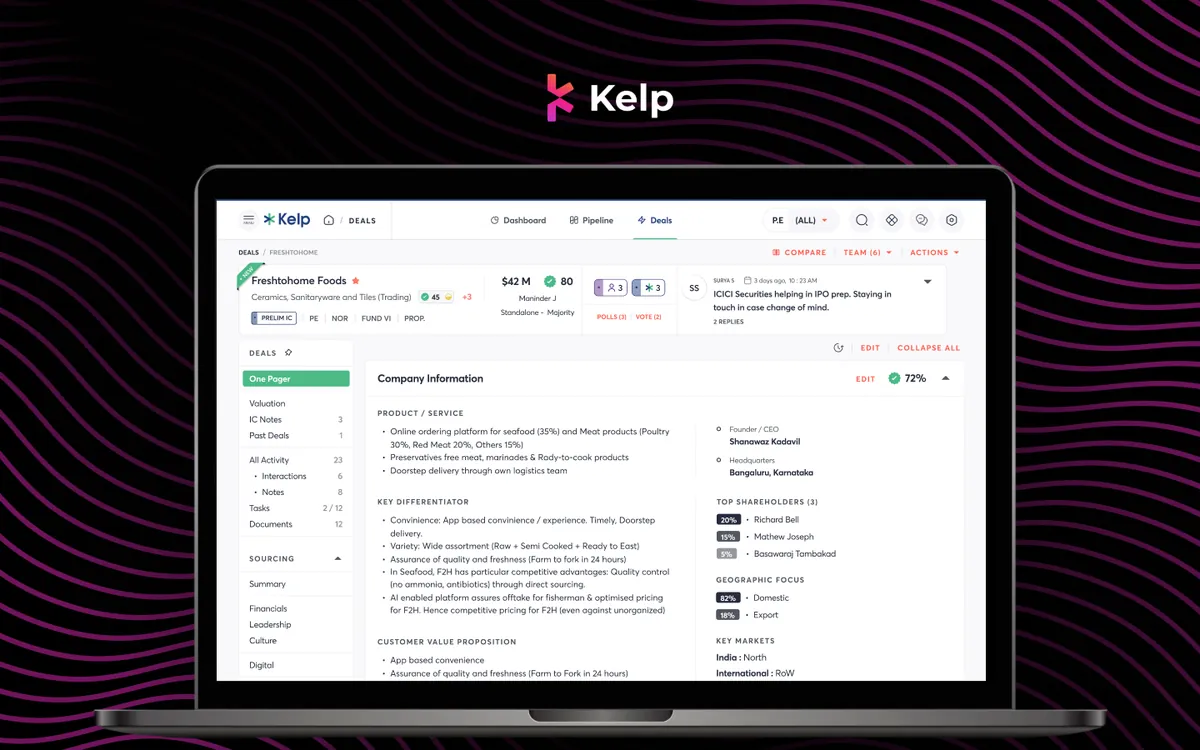
The Deals Module is the operational core of Kelp Global — where pipeline management moves from chaotic spreadsheets to a structured, visual workflow. We designed a Kanban-style pipeline with customizable stages, automated transitions, and deal health scoring that gives sales teams complete visibility into their pipeline. The interface was built for speed — every action a rep takes daily is optimized for minimum clicks and maximum context.
The Challenge
Existing deal tracking was a spreadsheet nightmare. Stages were unclear, handoffs were dropped, and there was no visibility into deal health. Sales managers couldn't tell which deals were at risk until it was too late. The system needed to make pipeline status instantly visible while automating the administrative work that kept reps from selling.
How We Approached It
Lifecycle Mapping
We mapped the complete deal lifecycle across 5 different sales teams, discovering that no two teams used the same stages or criteria for deal progression. Some had 4 stages, others had 12. We identified the common patterns underlying this diversity and designed a flexible stage system that could be customized per team while maintaining a consistent visual language and health scoring framework.
Kanban Pipeline Design
We designed a Kanban-style pipeline with customizable stages and automated transitions. Cards show deal value, age, health score, and next action at a glance. Drag-and-drop between stages triggers configurable automation — updating CRM fields, notifying team members, and logging activity. The board density was carefully calibrated to show enough deals for context without overwhelming the visual field.
Health Scoring System
We prototyped deal health scoring and risk indicators based on engagement signals, deal age, and stage progression velocity. The scoring algorithm weights factors differently based on deal size and type, surfacing at-risk deals with visual urgency indicators. We tested the scoring model against historical win/loss data to validate accuracy before building it into the interface.
Collaboration Features
We built collaborative features for deal reviews and team handoffs, including threaded comments, @mentions, and shared deal rooms where multiple stakeholders can coordinate. The handoff workflow was designed to eliminate the "lost context" problem — when a deal moves from SDR to AE, all context, recordings, and notes transfer automatically with a structured handoff template.
What We Delivered
A visual pipeline management system with customizable Kanban stages, automated health scoring, and collaborative deal rooms. The interface turns pipeline management from an administrative burden into a strategic advantage, giving teams instant visibility into deal health while automating the repetitive work that slows sales cycles.
What Makes It Stand Out
Kanban Pipeline
Visual drag-and-drop pipeline with customizable stages and automated transitions.
Deal Health Score
AI-powered scoring based on engagement, velocity, and historical patterns.
Risk Indicators
Visual urgency signals for stalled deals, declining engagement, and aging pipeline.
Stage Automation
Configurable triggers that automate CRM updates, notifications, and task creation.
Collaborative Notes
Threaded comments, @mentions, and shared deal rooms for team coordination.
Revenue Forecasting
Weighted pipeline forecasting with confidence intervals and historical comparison.
Design Highlights