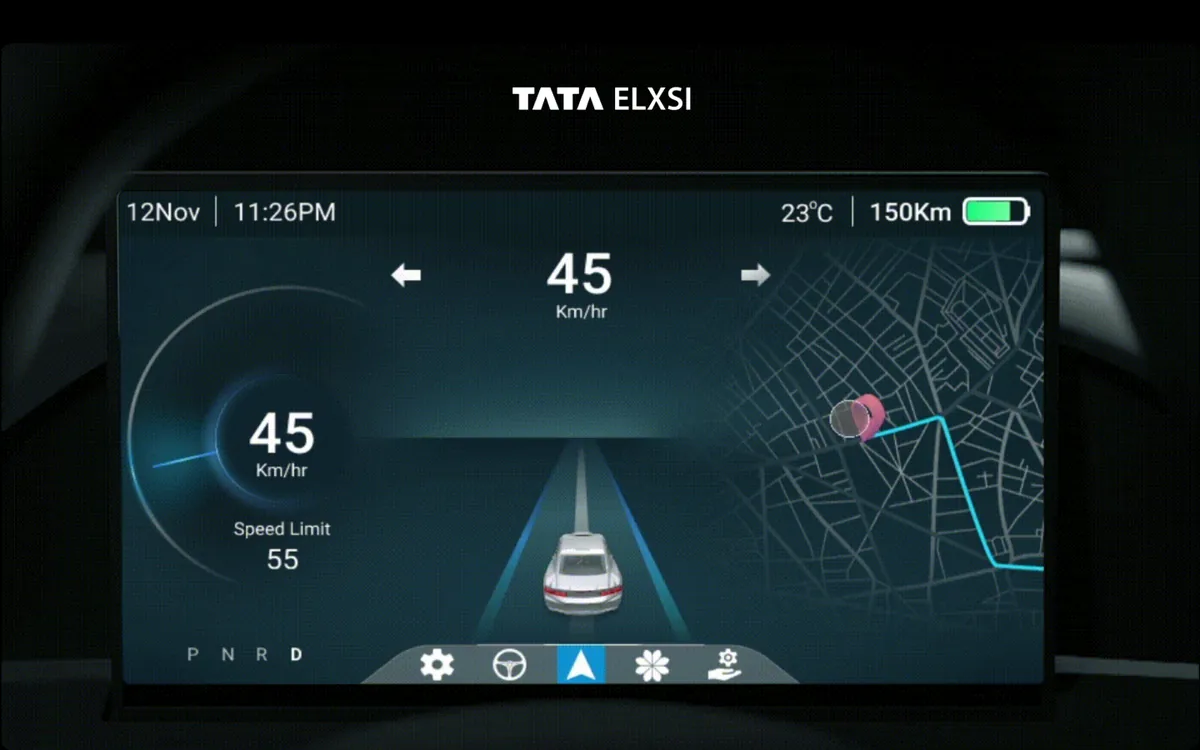
Digital Instrument Cluster
Digital cockpit instrument cluster with clear visual hierarchy and adaptive display.
Beyond Analog Gauges
The digital instrument cluster replaces traditional analog gauges with a fully programmable display that adapts to driving conditions, modes, and driver preferences. We designed adaptive display modes for city driving, highway cruising, sport, and eco — each prioritizing different information based on what matters most in that context. The design system was built with strict automotive contrast ratios and readability standards, ensuring critical information is always instantly scannable.
The Challenge
Traditional analog clusters were being replaced by digital screens, but early digital clusters simply mimicked analog gauges without leveraging the medium's capabilities. This was a wasted opportunity — digital displays can show contextual information, adapt to conditions, and present data in ways that physical gauges never could. The challenge was designing a system that leverages digital capabilities while maintaining the instant readability that analog gauges provided through decades of driver familiarity.
How We Approached It
Information Needs Research
We researched driver information needs at different speeds and conditions, studying ergonomic guidelines from SAE International and automotive HMI research papers. We cataloged every piece of information a driver might need — from critical (speed, warnings) to useful (range, temperature) to informational (media, calls). This hierarchy became the foundation for our adaptive display logic, ensuring the most important data is always visible regardless of mode.
Adaptive Mode Design
We designed four adaptive display modes: city driving prioritizes speed and navigation with simplified gauges; highway mode emphasizes cruise control, fuel range, and ADAS status; sport mode features a tachometer-centric layout with lap timing and performance data; eco mode shows efficiency metrics, regenerative braking indicators, and range optimization. Each mode was designed as a complete, self-contained visual system with smooth transitions between them.
Transition Animation
We prototyped animation transitions between modes, ensuring zero distraction during mode changes. The transitions use morphing animations that maintain spatial consistency — the speedometer always stays in the same relative position, but surrounding elements reorganize around it. We measured glance disruption during transitions in simulator tests, iterating until mode changes were imperceptible to drivers focused on the road.
Automotive Design System
We created a comprehensive design system for automotive UI with strict contrast ratios (minimum 7:1 for critical info), readability standards calibrated for peripheral vision, and a color language where red always means critical, amber means caution, and green means normal. The system includes guidelines for every lighting condition from bright sunlight to complete darkness, with automatic brightness and color temperature adjustment.
What We Delivered
A production-ready digital instrument cluster with four adaptive display modes that prioritize information based on driving context. The design system ensures automotive-grade readability under all conditions, while seamless mode transitions maintain driver focus. The work was published on Behance and recognized within the automotive HMI design community.
What Makes It Stand Out
Adaptive Display Modes
Four context-aware modes: City, Highway, Sport, and Eco — each optimized for different driving needs.
Speed-based Layout
Automatic layout adaptation based on vehicle speed for safety-first information display.
ADAS Integration
Visual representation of advanced driver assistance systems including lane keep and adaptive cruise.
Night Mode
Automatic brightness and color temperature adjustment for comfortable night driving.
Navigation Overlay
Turn-by-turn navigation integrated directly into the cluster with upcoming maneuver previews.
Vehicle Health Monitoring
Real-time vehicle diagnostics with clear warning hierarchy and maintenance reminders.
Design Highlights