
A UX design partner for the UAE, with the work to prove it
We have delivered seven luxury property experiences in Dubai, including for Omniyat. That means Arabic RTL done properly, an understanding of how Gulf buyers evaluate, and a working time zone rather than a long lag.
What working in the UAE actually requires
Arabic is not a translation task
RTL mirrors layout, but numerals stay left-to-right, directional icons each need a decision and the visual centre of gravity shifts.
The audience is multilingual
One product may serve Emirati, South Asian, European and Chinese users. Designing for a single assumed reader excludes much of the market.
Regulated finance has its own perimeter
DIFC and ADGM run distinct regimes; flows built for another jurisdiction need real rework.
Premium is the baseline
In Dubai's property and luxury segments, adequate design reads as a downgrade.
How we work with UAE teams
Time zones
India is 1.5 hours ahead of Gulf Standard Time, so we share essentially the whole working day.
Bilingual design systems
One system with direction-aware tokens and components instead of two parallel design efforts.
Commercials
Quoted in USD or AED. Bilingual projects carry real additional scope, which we include upfront.
Local collaboration model
Remote, with live sessions in your working hours and RTL rules documented for your engineers.
Work in Dubai
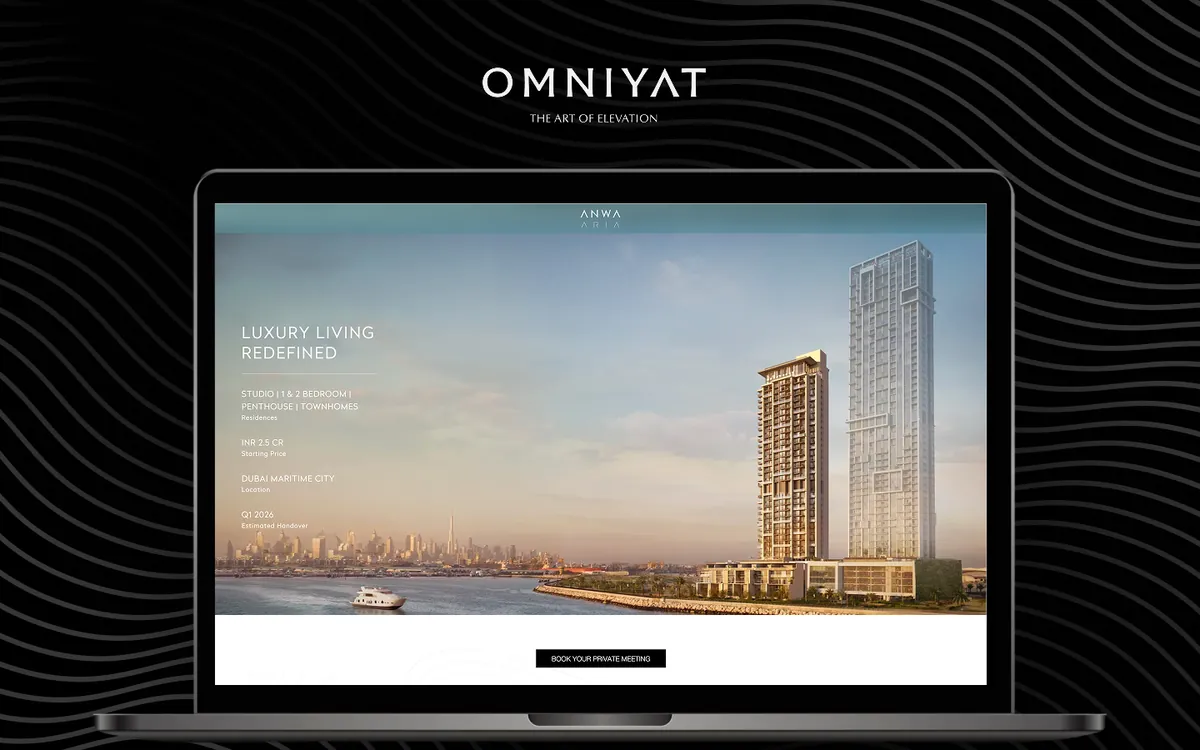
Omniyat, LIV Residences, Orla Infinity, Opus, Anwa Aria, Ela and Vela Viento.
Frequently asked questions
Do you have actual UAE experience, or just a Dubai landing page?
Actual experience: we designed seven luxury property experiences in Dubai through Rcentric, including work for Omniyat. We are an India-based studio serving UAE clients, not a Dubai-registered agency, and we would rather say that plainly.
How do you handle Arabic RTL properly?
By designing bidirectionally from the start. Layout flips, but numerals remain left-to-right, directional icons each need a decision, Arabic typography needs different vertical rhythm, and the entry point of every screen moves. We document these rules for engineering.
Can you work with DIFC or ADGM-regulated entities?
Yes. Both have their own onboarding, disclosure and record-keeping expectations, so we work directly with your compliance team from week one.
What are your working hours relative to the UAE?
India is 1.5 hours ahead of Gulf Standard Time, so we share essentially the entire working day.
Do you work in Abu Dhabi and the wider Gulf?
Yes. Our delivered work is concentrated in Dubai, but bilingual audiences, RTL, premium expectations and Gulf regulatory context carry across Abu Dhabi, Saudi Arabia and the wider GCC.
Can you handle English and Arabic in one design system?
That is what we recommend. A single bidirectional system costs less to build and maintain than two parallel efforts and prevents the language versions drifting apart.
Bilingual from the first wireframe
Tell us about your audience and markets. We'll show you how we would structure the product for English and Arabic from the start.