
Client · Real estate
R-Centric: seven luxury Dubai property experiences on one shared system
For R-Centric we designed digital experiences for seven luxury developments in Dubai, including Omniyat projects. Each needed its own story and buyer journey; a shared system let every launch ship without starting from scratch.
Executive summary
Each luxury development needed a digital experience that matched its architecture and convinced a specific international buyer, without every launch starting from zero. Designit designed experiences for LIV, LIV Reside, Orla Infinity, OPUS, Vela Viento, Anwa Aria and Ela on a shared system that kept each property distinct.
What changed is how each site sells: location first where the area was new, daily life instead of slogans where community was the promise, and separate journeys for each audience in a mixed-use building, with enquiry flows designed to qualify buyers rather than collect form fills.
Project facts
- Industry
- Luxury real estate and PropTech
- Product
- Property websites for seven developments
- Users
- International high-net-worth buyers; for OPUS also corporate tenants and hotel guests
- Market
- Dubai, UAE
- Our role
- Website design, design system
- Tools
- Figma, Webflow, animation, photography direction
Problem statement
How might we give seven very different luxury properties websites as distinctive as their architecture, while buyers, enquiries and the team all benefit from one shared system?
Empathize
Who we designed for
International high-net-worth buyers deciding from a screen, investors weighing location and value, and Omniyat's sales team waiting for qualified enquiries.
International buyers
Judge a Dubai property online before deciding whether to visit.
Investors
Want location, availability and value made clear.
Sales teams
Want fewer, better-qualified enquiries with context.
Pain points
Template sites undersold landmark architecture.
Each property had a different audience and story.
Rich media risked slow pages.
Standard contact forms felt transactional for a private purchase.
The business and buyer problem
Every property had a different obstacle. Anwa Aria sat in an emerging area and had to overcome location scepticism. OPUS, a Zaha Hadid building, served three audiences with different goals. LIV Reside's "community living" needed proof rather than adjectives. Ela had to balance sustainability with luxury. Vela Viento's international buyers needed multiple languages and currencies, and Orla Infinity needed cinematic media without sacrificing performance.
What we did
A story per property
Research and positioning for each development's buyer, from location storytelling to lifestyle vignettes.
Journeys per audience
Multi-audience information architecture where buildings served homebuyers, tenants and guests.
Immersive, but fast
Scrollytelling, full-bleed imagery and animation, with performance optimisation for media-heavy pages and mobile.
Qualification, not capture
Comparison tools, availability and enquiry flows designed to bring serious buyers forward.
One shared system
Foundations reused across launches so each new property shipped faster while keeping its own identity.
Key lessons
- Sell the location before the unit when the area is new.
- Show daily life, don't claim community. Buyers discount adjectives.
- Give each audience its own journey in a mixed-use building.
- Qualify, don't just capture. Fewer, better enquiries serve sales teams.
Case studies
Every R-Centric property
R-Centric
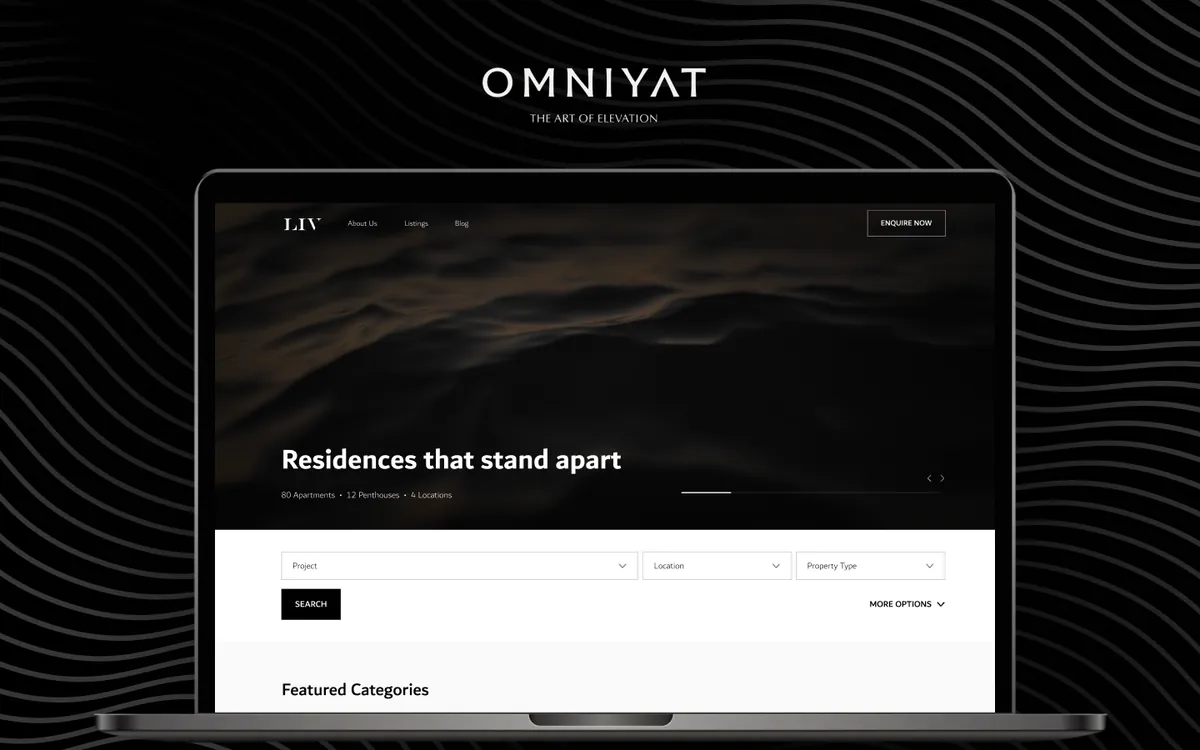
LIV
A private-showroom website for LIV, Omniyat's exclusive real estate partner.
View case study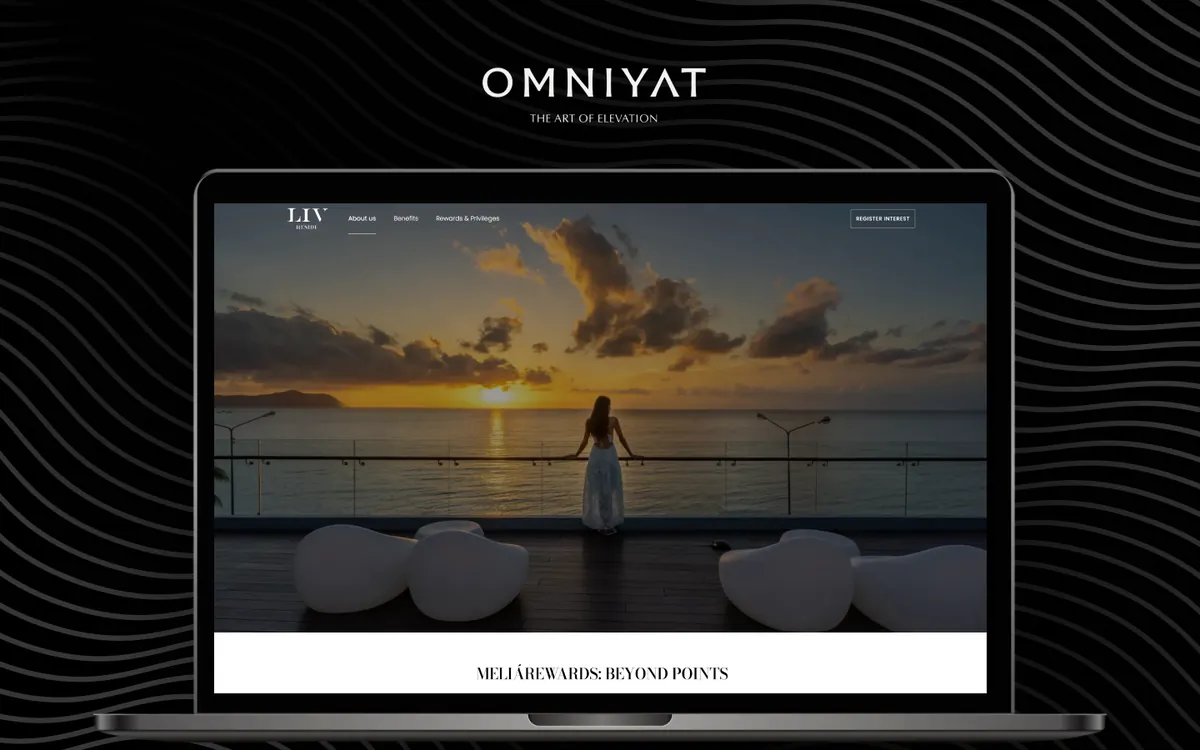
R-Centric
LIV Reside
A residential community website that shows daily life, not just square footage.
View case studyR-Centric
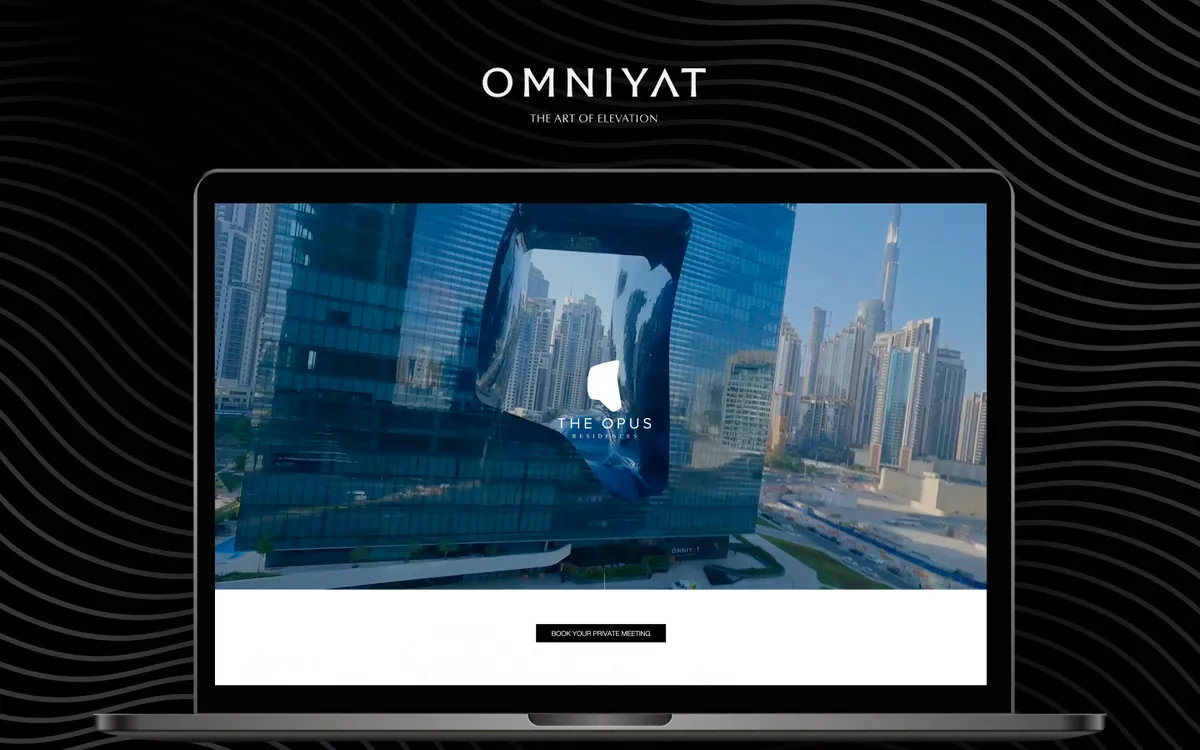
OPUS
A digital home for Zaha Hadid's OPUS: residences, offices and a hotel in one experience.
View case study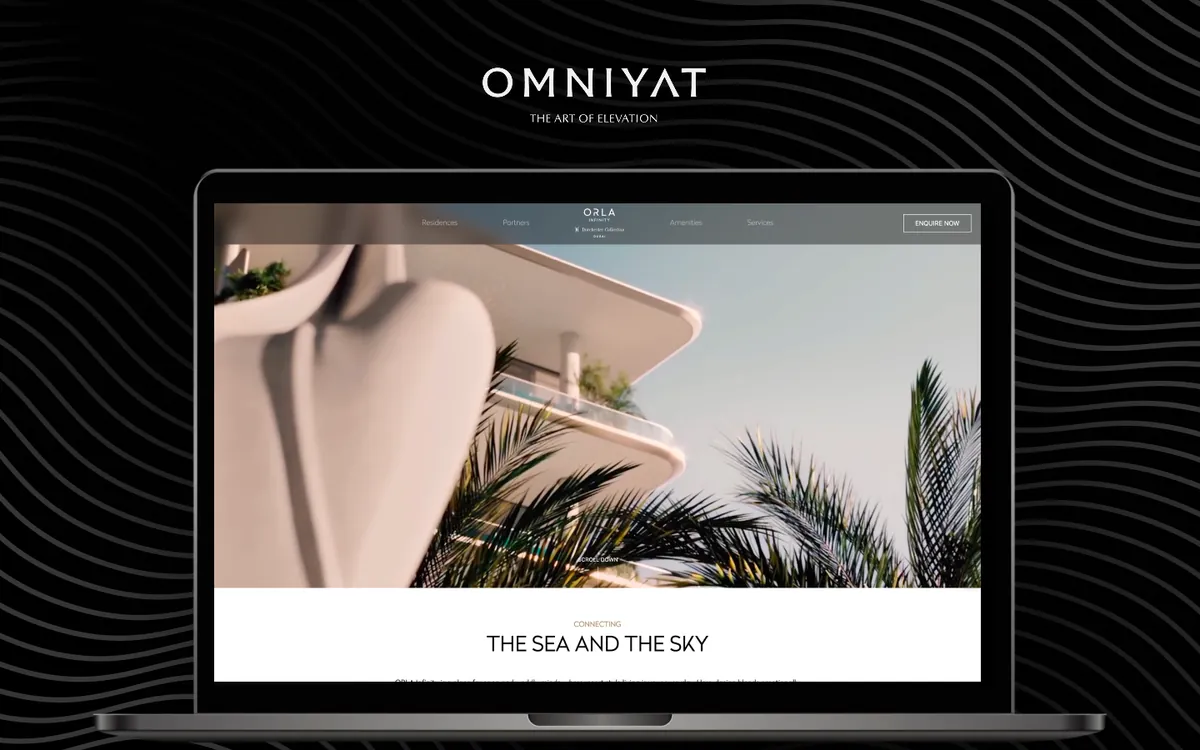
R-Centric
Orla Infinity
A cinematic website for a Palm Jumeirah residence, built to create desire before a visit.
View case study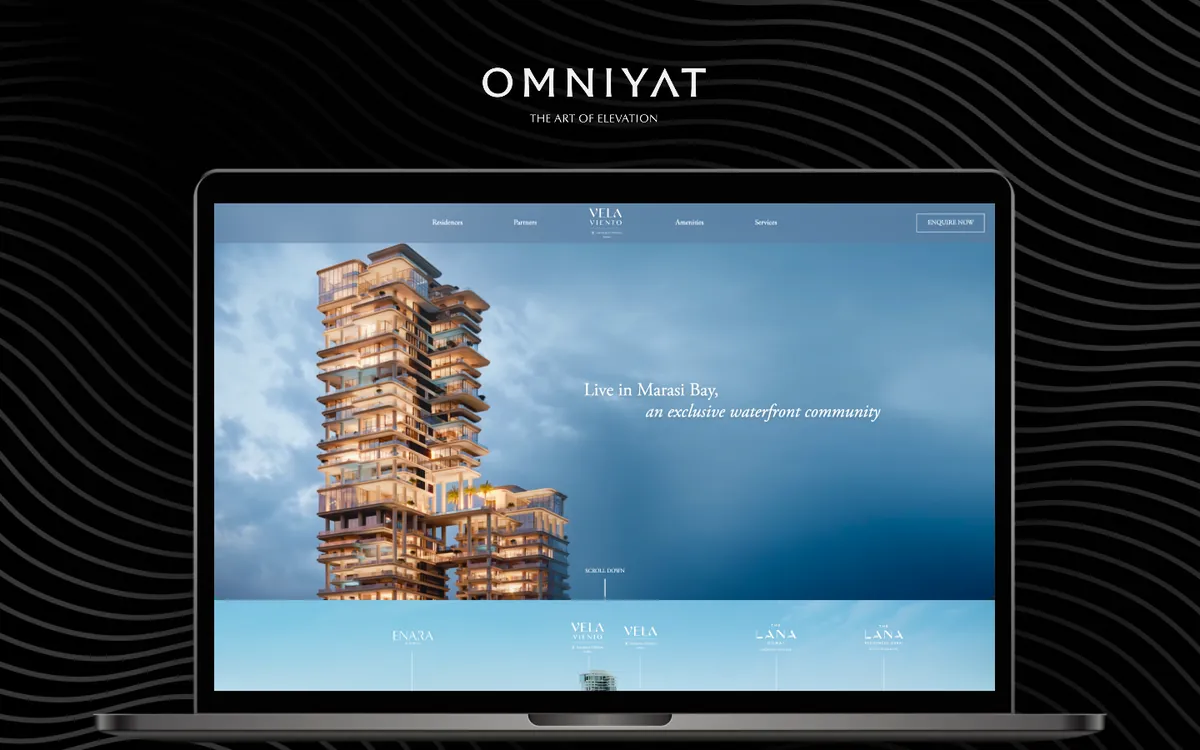
R-Centric
Vela Viento
Scrollytelling for a Foster + Partners waterfront residence with Dorchester Collection services.
View case study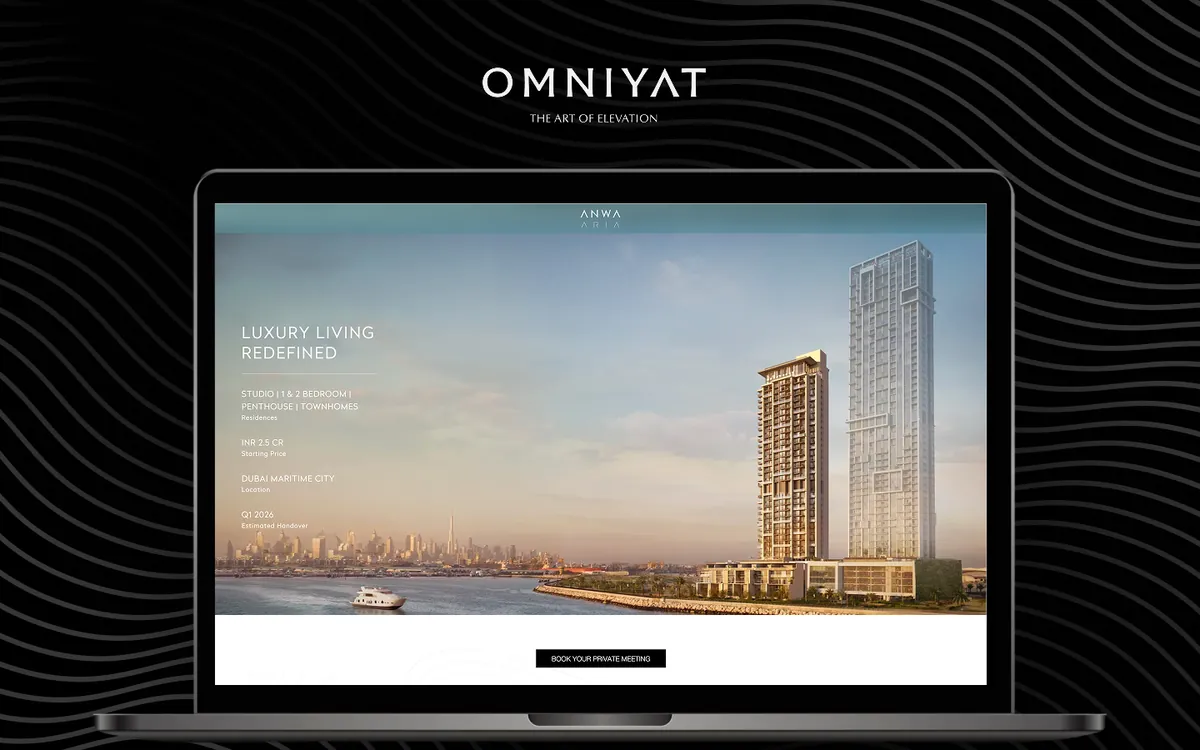
R-Centric
Anwa Aria
Selling a new waterfront address as well as the tower that defines it.
View case studyFrequently asked questions
Which Omniyat properties did Designit design websites for?
Seven, through R-Centric: LIV, LIV Reside, OPUS, Orla Infinity, Vela Viento, Anwa Aria and ELA Residences. Six of them have their own case study.
How do you keep several luxury property sites distinctive but consistent?
Share the system, not the look: common components, navigation and enquiry flows, with each property's imagery, typography and story leading its own experience.
Which properties did Designit design for R-Centric?
LIV, LIV Reside, Orla Infinity, OPUS, Vela Viento, Anwa Aria and Ela, luxury developments in Dubai including Omniyat projects.
Why a shared system across properties?
So each new launch could ship quickly while keeping its own identity, instead of designing every property from scratch.
What features should a luxury real estate website in Dubai have?
Immersive photography and video, clear unit and floor-plan information, location context, multilingual content for international buyers, and an enquiry flow that feels like requesting a private consultation.
What is scrollytelling?
Storytelling driven by scrolling, where each section reveals the next part of the story with choreographed imagery and motion. Vela Viento uses the bay as a visual thread through the whole page.
How do you turn property website visitors into qualified enquiries?
Build desire first, then make the next step feel exclusive and useful: a short, multi-step enquiry that captures what the buyer wants, so the sales team receives context, not just a name.
Do the property websites support international buyers?
Yes. The case studies describe multi-language and, where needed, multi-currency experiences and time-zone-aware scheduling for viewings and calls.
Where can I see each property in detail?
Six of the seven properties have their own case study, linked above.
Launching a property or a portfolio?
Tell us about the development and the buyer. We'll show you how we'd structure the journey to a qualified enquiry.